研究交流会
共催:群馬大学大学院理工学府
【日時】
2026年6月26日(金) 13時~19時
【場所】
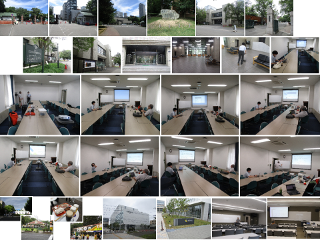
群馬大学 桐生キャンパス 理工学図書館2F多目的ホール
【内容】
〔レクチャー トーク:Lecture Talks〕
「状態空間モデルにおける状態推定およびパラメータ推定」
"State Estimation and Parameter Estimation in State-Space Models"
生駒 哲一(日本工業大学)
[概要]
状態空間モデルと状態推定は,動的システムの隠れ状態を効果的に推定する枠組みである.
モデル所与の下での状態推定は,線形ガウスモデルの場合は解析的なカルマンフィルタが用いられ,
非線形や非ガウスの場合は,拡張カルマンフィルタ等の近似フィルタが用いられる.
非線形性が強く,状態推定の解が強い非ガウス性を持つ場合は,
多峰な確率分布を扱えるフィルタが必要となり,
中でも高い汎用を持つのがパーティクルフィルタである.
本講演では,上記を解説した後,過去の時刻の状態を推定する平滑化と,
モデル同定のための固定パラメータ推定についても触れる.
「画像認識AIの判断根拠の可視化と言語化」
"Visualization and Natural-Language Explanation of Image Recognition AI Decisions"
〇川本 一彦,計良 宥志 ,山内 俊典(千葉大)
※リモート講演
[概要]
画像認識AIの信頼性を高めるためには、予測結果だけでなく、その判断根拠を人が理解できることが重要である。本講演では、画像のどの領域や領域の組み合わせが予測に寄与したかを可視化する手法と、その判断根拠を自然言語で説明する手法を紹介する。これらの研究を通して、画像認識AIの判断を、視覚的かつ言語的に分かりやすく説明する技術について述べる。
〔セッション1〕
"Fundamental Theory of Signalized Intersections and Its Application to Intelligent Traffic Control Systems"
Magzhan Atykhan(群馬大学)
[概要]
Traffic intersections are critical components of urban transportation networks, serving as points where multiple traffic streams interact and compete for limited roadway space. The performance of these intersections significantly influences traffic efficiency, safety, travel time, fuel consumption, and environmental sustainability. Understanding the fundamental theories governing intersection operations is essential for the design and implementation of effective traffic management strategies. This presentation introduces the theoretical foundations of traffic intersections, including traffic flow characteristics, signal timing principles, queue formation mechanisms, and intersection capacity analysis. Vehicle-following behavior and microscopic traffic modeling concepts are also discussed, highlighting the role of car-following models such as the Intelligent Driver Model (IDM) in representing human driving behavior. Furthermore, the presentation reviews modern traffic control approaches,
ranging from fixed-time and actuated signal systems to adaptive and optimization-based control strategies. Building upon these theoretical concepts, the presentation concludes with the introduction of a practical intelligent traffic control project that applies advanced modeling, simulation, and optimization techniques to improve intersection performance. The project demonstrates how vehicle control methods can be utilized to reduce vehicle delays, improve traffic flow efficiency, and support the development of smart transportation systems.
「カルマンスムーザを用いたドライバトルクの推定」
〇山岸 洸太,精廣 陽,川口 貴弘,橋本 誠司(群馬大学)
[概要]
近年、自動車の安全性を高める操舵支援システムが開発されている。しかし、システム作動中にドライバが保舵を行うと、その操舵力(ドライバトルク)が外乱として加わり、システムが本来の性能を十分に発揮できない可能性がある。さらに、ドライバトルクは物理的なセンサで直接計測することが困難であるという課題がある。 そこで本研究では、この直接計測できないドライバトルクを推定する問題を取り扱う。具体的には、未知データ推定法としてカルマンスムーザを適用し、シミュレーション環境下においてその有効性を検証する。
"A Mathematical Framework for Epistemic Feature Gating against Spatio-Temporal Cross-Attention Memory Overwrite"
Chowdhury Umme Rubaiyat(群馬大学)
[概要]
Vision-centric 3D semantic occupancy networks conventionally project multi-view
2D spatial feature representations into a unified 3D volumetric space using
spatio-temporal cross-attention transformations [1, 2, 3]. To bypass optimization
bottlenecks, these architectures universally leverage deterministic 2D
spatial priors. However, this optimization strategy introduces a fundamental
contradiction designated as the Spatio-Temporal Paradox. Deterministic
spatial backbones are optimized for high-frequency textural gradients [4].
Under non-stationary kinetic out-of-distribution (OOD) perturbations (e.g.,
motion blur or high-frequency environmental noise) [5], these spatial backbones
undergo structural collapse, generating uncalibrated, high-magnitude anomalous
activations. When routed through sequence-level cross-attention mechanisms,
these warped spatial maps trigger a cascading state corruption formalized
as Temporal Poisoning. Because the cross-attention pooling layer naively
matches query vectors with these high-magnitude corrupted spatial keys,
instantaneous anomalies propagate directly into the recurrent temporal
framework, irreversibly overwriting the geometrically stable historical
query buffer Ht?1 and degrading long-term structural context. To resolve
this vulnerability, we establish a formal mathematical firewall called
the Evidential Feature Gate (EFG), derived from the axiomatic principles
of Dempster-Shafer Theory [6] and Subjective Logic [7]. Standard neural
operators map unnormalized logits to point estimates over a probability
simplex via Softmax activations, yielding overconfident outputs regardless
of severe domain shifts [8]. In contrast, the EFG re-casts the intermediate
spatial feature representation as a non-parametric evidence-gathering process
that parameterizes a continuous Dirichlet distribution. Let Ft ∈ R C×H×W
represent the intermediate spatial feature tensor map extracted at time
t. The gate maps these representations to non-negative class evidence parameters
et = Softplus(Conv(Ft)) + ε, where the translation constant ε > 0 strictly
enforces a lower bound to avoid a zero-evidence singularity. For a defined
semantic universe spanning K singleton classes, the total aggregate Dirichlet
parameter mass is defined as St = PK k=1 et,k + K. Within this subjective
probability framework, the epistemic uncertainty mass ut is inversely proportional
to the aggregate spatial evidence, bounded analytically by the semantic
cardinality: ut = K/St. The underlying theoretical logic dictates that
when kinetic OOD disruptions destroy low-level feature stability, the accumulated
localized evidence approaches its lower limit (St → K), driving the epistemic
uncertainty to its supremum (ut → 1.0). The EFG projects this uncertainty
map into a continuous linear gating tensor Gt = (1 ? ut), executing an
active feature firewall via the element-wise Hadamard product: F?t = Ft
? Gt. As ut → 1.0, the gating tensor converges to zero (Gt → 0), executing
a zero-vector attenuation of the corrupted spatial keys and values. Deprived
of high-magnitude spatial activations, the downstream cross-attention matrix
is mathematically compelled to default to the uncorrupted structural state
variables preserved within the historical history buffer Ht?1. This evidential
routing paradigm effectively decouples the structural benefits of 2D spatial
priors from their kinetic vulnerabilities, providing rigorous mathematical
guarantees for temporal state preservation under adverse distribution shifts.
〔セッション2〕
"The Parameterization of All Unknown Input Disturbance Observers for Plants with General Exogenous Output Disturbances"
GRERKIAT KORBUAKAEW(群馬大学)
[概要]
Disturbance observer-based control has been recognized as one of the most promising approaches for disturbance attenuation, and many papers on design methods of disturbance observers have been published. Recently, the parameterization of all disturbance observers for plants with any disturbances has been clarified. However, these methods generally require the availability of the control input. Since there are systems which the control input of system is not unavailable, it is essential to design unknown input disturbance observers. In this paper, we clarify the parameterization of all unknown input disturbance observers for plants with general exogenous output disturbances. Furthermore, we present a design method applicable to such observers.
"Coverage Based Rapid Area Distribution for Decentralized Multi-Agent Control"
Rashad Abul Khayr(群馬大学)
[概要]
Autonomous unmanned systems have numerous applications in a complex environment. One such application is coverage path planning to explore and cover a known or unknown area. The efficiency of such an application, especially for multi-agents, can be greatly increased by dividing the active area into an exclusive connected area of operation beforehand. Finding an equal division for the coverage path planning can be crucial to the performance of such operation. Therefore, an optimized region distribution method using artificial potential field constraint by anchoring point and their neighbor to find optimal base placement. This base can then be used by spanning tree coverage with connectivity-conscious bidding to ensure equal area distribution across all agent. The proposed method managed to achieve even distribution in an area with or without obstacle outperforming rapidly exploring random trees and centroid veronoi tesselation in terms of time required and the area distributed.
"Emerging traffic control strategies for optimizing traffic performance"
Hasan Ahmad(群馬大学)
[概要]
The transportation sector is undergoing rapid transformation with the integration of artificial intelligence (AI), optimal driving strategies, and vehicle-to-everything (V2X) communication. While considerable research has been conducted on driving behavior and traffic signal control, a holistic traffic signal control scheme that utilizes modern V2X communication to predict traffic pattern ahead is still yet to be developed . In this research, we investigate the effects of both traffic behavior and how signal control strategies can accommodate them accordingly to minimize intersection traffic delay. Since intersection make roughly 80% of total commute delay we show that different types of vehicle will act differently to a change in signal duration and how to find the optimal method to address them. The modified Gipps model is employed to represent human driving, and a typical adaptive cruise control (ACC) model is used for automated driving. Using the high-fidelity traffic simulation platform AIMSUN NEXT, we analyze congestion formation and intersection delays, focusing on how these vary across vehicle classes. After that, we analyze how this idling and drop in harmonic speed relates to vehicle type. The findings indicate that fixed-time signal plans are suboptimal in mixed traffic conditions. In contrast, adaptive signal control can substantially improve intersection efficiency by leveraging both V2X technology and next generation 5G infrastructure to enable real-time adjustments to traffic signals based on predicted traffic patterns. Finally, we outline a predictive framework for future implementation in roadside units to enable proactive traffic management in mixed vehicular environments.
"An double feedback control and its applications"
小山 大輔(群馬大学)
[概要]
An actual plant often differs from its model. An error between actual plants and these models is called the uncertainty. Since the uncertainty affects stability or performances of a control system such as a low sensitivity characteristics in the meaning of disturbance attenuation property, it is needed to obtain a control system design keeping stability or performances of control system for the uncertainty. To keep stability and achieve low sensitivity characteristics for a class of plants, a two-degree-of-freedom control system called the double feedback control system, which have a two-degree-of-freedom control system includes a two-degree-of-freedom control system, is proposed. The double feedback control system remains stability, and shows prior low sensitivity characteristics more than conventional two-degree-of-freedom control systems. In this presentation, we introduce the double feedback control system, and its applications.
〔セッション3〕
「カーネル正則化を用いた逐次システム同定法と二次電池の充電率推定への応用」
〇鈴木 湧也*,丸田 一郎(京都大学),長村謙介(マレリ株式会社),新井正敏(埼玉大学・マレリ株式会社),川口貴弘(*群馬大学)
[概要]
時変システムの有限長のインパルス応答を逐次的に推定する場合を考える。本発表では,μ-マルコフモデルを用いた一般的な忘却係数付き逐次最小二乗法にカーネル正則化を新たに適用することで,有限長インパルス応答をより滑らかに推定する,新しい逐次同定法を提案する.さらに,この提案法をリン酸鉄リチウムイオン二次電池の充電率(SOC)推定に適用し,従来法との比較を通じてその推定精度を評価する.これにより,提案法の有用性を示す.
"Secure V2V State Estimation Using Gated Kalman Filter"
PHAN PHEARAMONY(群馬大学)
[概要]
This study addresses the security of Vehicle-to-Vehicle (V2V) communication in cooperative perception systems for autonomous highway merging, where vehicles rely on broadcast position and velocity data to make safety-critical control decisions. While Kalman filtering is commonly used to mitigate GPS sensor noise in V2V data, standard implementations have no mechanism to distinguish genuine sensor noise from deliberately falsified measurements, leaving the system vulnerable to spoofing attacks that can mislead a vehicle's perception of surrounding traffic. We propose a statistical framework that monitors the Kalman filter's innovation sequence and applies a Normalized Innovation Squared (NIS) hypothesis test at each measurement update, rejecting measurements that are statistically inconsistent with the expected sensor noise distribution before they can corrupt the state estimate. The framework is evaluated in a simulated highway merging scenario under a sustained position and velocity spoofing attack. Results show that the proposed approach detects the onset of an attack immediately and substantially reduces the resulting state estimation error compared to an undefended filter, while also revealing a covariance growth effect under prolonged attack that motivates adaptive noise estimation as a natural extension. This work contributes a statistically grounded, computationally lightweight detection layer for V2V-based cooperative perception and outlines a path toward more robust secure state estimation for autonomous vehicles.
「拡張カルマンフィルタに基づく路面摩擦係数推定」
Wang yingcan(群馬大学)
[概要]
路面摩擦係数は,車両の操縦および走行安全性に大きな影響を与える重要なパラメータである。しかし,路面摩擦係数を直接計測することは困難であるため,車両の動的応答を利用した推定が必要となる。本研究では,非線形2自由度車両モデルとDugoffタイヤモデルを用いて,拡張カルマンフィルタ(Extended Kalman Filter,EKF)に基づく路面摩擦係数推定手法を構築した。また,Matlab環境において提案手法の有効性を検証した。シミュレーション結果より,提案手法は異なる路面条件における摩擦係数を高精度に推定でき,良好な収束性能を有することが確認された。さらに,推定結果は車両制御システムにリアルタイムな路面情報を提供し,車両安定化制御への応用が期待される。
「GPU並列計算によるモンテカルロ自己位置推定~移動ロボットシミュレーションと実機実装」
〇渡邉 龍生,生駒 哲一(日本工業大学)
[概要]
移動ロボットの自己位置推定手法には,状態空間アプローチの非ガウスフィルタであるモンテカルロ自己位置推定(MCL)が広く使用されている.MCLは状態変数である位置・姿勢の事後確率分布を多数の粒子によって近似する手法であり,粒子は時間的に更新されその計算は独立に実行できる.本研究では,MCLの粒子計算にGPUを用いた並列実装を適用し,粒子の計算を効率化する手法を提案する.さらに,並列化したMCLについて,移動ロボットシミュレーションと実機実験を行いその結果を報告する.
【意見交換会】
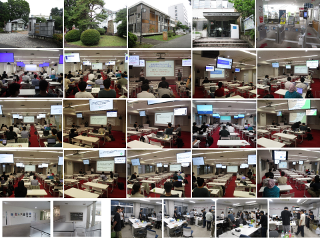
夕方より,学内にて開催しました(実費).
【発表参加の申し込み】
フォームからの申込みは終了しました.
|
|